Operators of “Blessing Loom” Scheme Banned from Multi-Level Marketing As a Result of Pyramid Scheme Charges Brought by the FTC and Arkansas

[ad_1]

The operators of a “blessing loom” investment program that targeted African Americans and people struggling financially during the Covid-19 pandemic are banned from the business of multi-level marketing as a result of enforcement actions taken by the Federal Trade Commission and the State of Arkansas alleging the operation of an illegal pyramid scheme.

In the joint complaint against Blessings In No Time (BINT), the FTC and the State of Arkansas alleged that Texas-based BINT Operations LLC and its two co-founders, LaShonda Moore and her husband Marlon Moore, operated a chain referral pyramid schemethat bilked tens of millions of dollars from thousands of consumers. 

“The FTC’s settlement permanently ends an illegal pyramid scheme that targeted Black communities with false promises of no risk substantial income,” said Samuel Levine, Director of the FTC’s Bureau of Consumer Protection. “While defendants guaranteed wealth, they delivered only losses for almost all participants. This settlement stops defendants from perpetuating such a scheme ever again.”

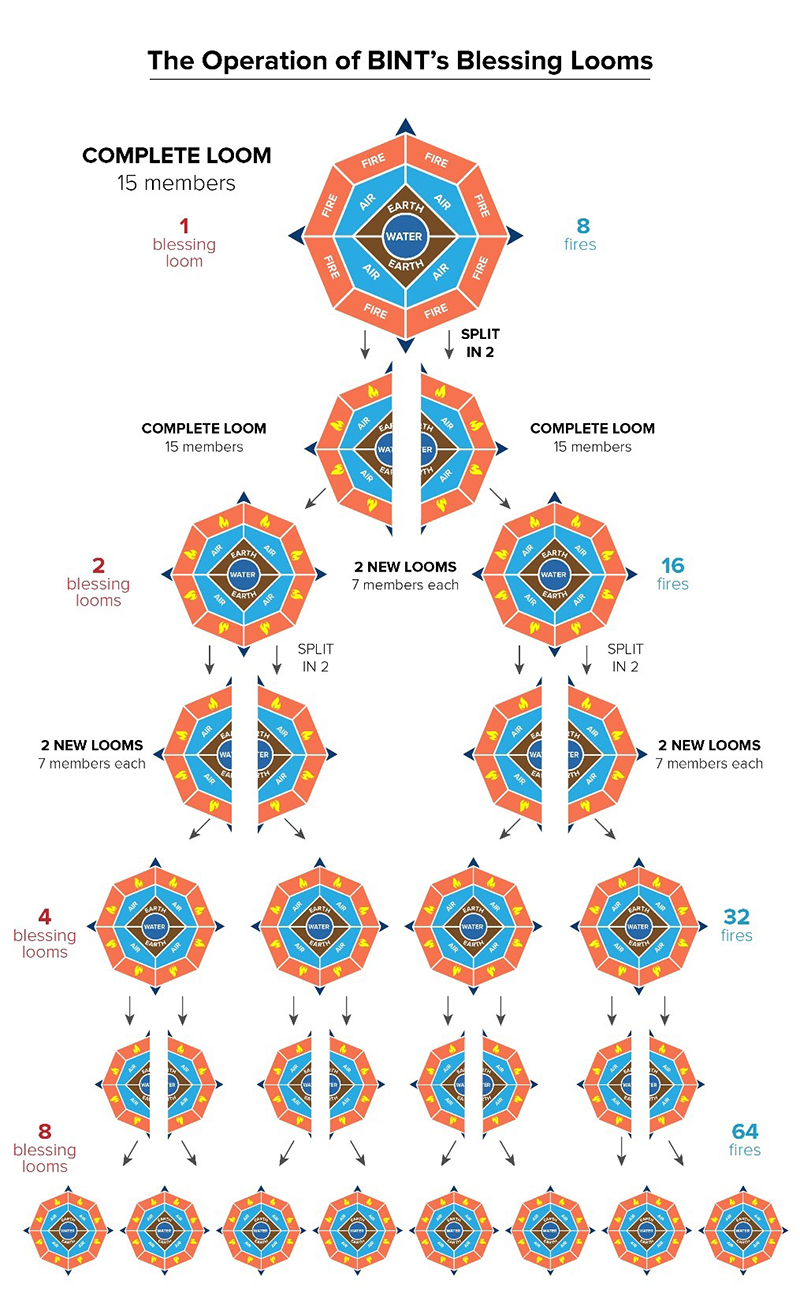
The FTC and Arkansas alleged that, beginning in June 2020, BINT lured consumers to join their program by falsely promising investment returns as high as 800 percent. Like most blessing looms, BINT allegedly coordinated payments (called “blessings”) between members using playing boards with different levels. Higher-level members were tasked with recruiting new participants to join their playing board and could ultimately move up and receive payments from new recruits.

Graphic depicting the operation of the "blessing looms"

In reality, though, as in other pyramid schemes, the vast majority of participants lost money and the investment returns BINT promised to participants were merely funds paid by other members., the complaint alleged. The complaint alleged that some BINT members paid over $50,000 to participate. BINT also allegedly prohibited participants from truthful, non-defamatory reviews and other information about the scheme on social media or online.

In addition to permanently being banned from multi-level marketing in the settlement with the FTC, the defendants will also be prohibited from operating any chain referral scheme, including “blessing loom” schemes like BINT, and will be banned from making deceptive or unsubstantiated income claims or misrepresentations. Moreover, defendants will pay at least $450,000 into a fund administered by the state of Texas that will be used to provide refunds to affected consumers. 

The Commission vote approving the stipulated order was 3-0. The FTC’s Southwest Region office was primarily responsible for this matter.

[ad_2]

Source link

Operators of “Blessing Loom” Scheme Banned from Multi-Level Marketing As a Result of Pyramid Scheme Charges Brought by the FTC and Arkansas Read More »

FTC Announces Claims Process for Consumers Who Purchased DreamCloud Mattresses

[ad_1]

The Federal Trade Commission has announced a claims process by which consumers who purchased a DreamCloud mattress and were influenced by the company’s claims that the product was made with U.S. materials can apply for a refund.

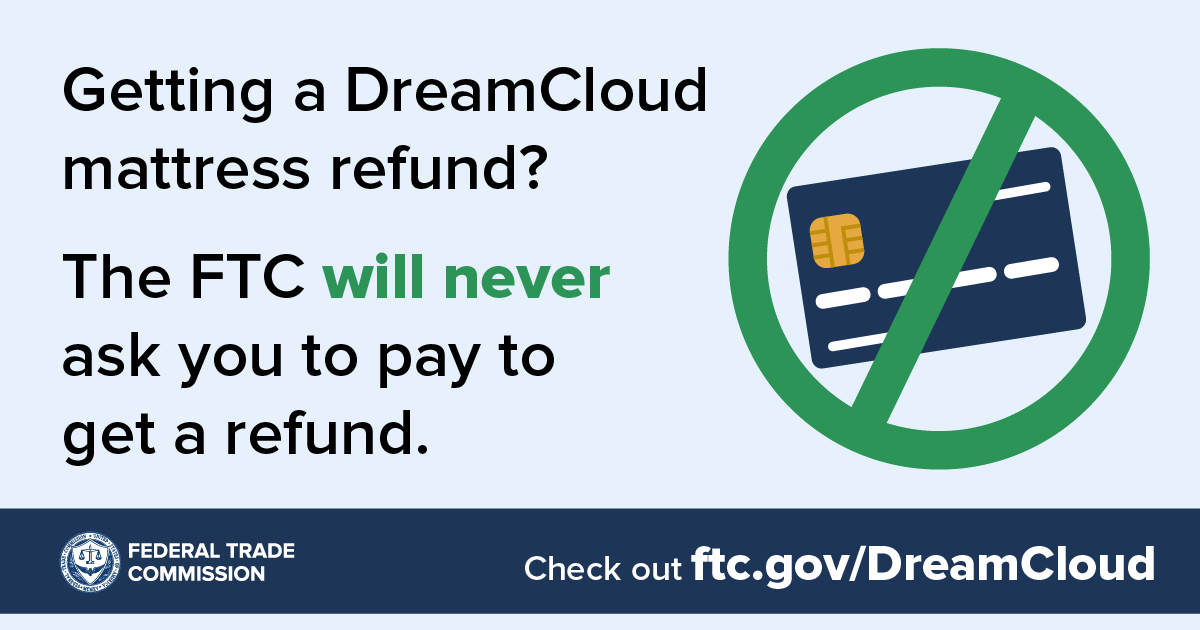
dreamcloud Refund GraphicThe FTC sued the company responsible for DreamCloud mattresses in 2021. DreamCloud mattresses were advertised as “proudly made with 100% USA-made premium quality materials.” However, according to the FTC, all DreamCloud mattresses contain significant imported materials, and many are wholly imported. The company agreed to settle the FTC’s charges and paid money to provide refunds to affected consumers.

The FTC is sending claim notices by email and mail to consumers who purchased a DreamCloud mattress during the time period that the company was making these claims. These messages include a claim number that the consumers can use to file a claim online at ftc.gov/DreamCloud. Consumers can apply for a refund if their decision to purchase a DreamCloud mattress was influenced by the company’s untrue claims about the origin of the mattresses. Consumers who have questions about the claims process should contact the refund administrator, JND Legal, at 1-844-798-0740.

[ad_2]

Source link

FTC Announces Claims Process for Consumers Who Purchased DreamCloud Mattresses Read More »

FTC Issues Supplemental Proposed Amendments to its Amplifier Rule to Make Testing Methods More Useful to Consumers

[ad_1]

The Federal Trade Commission has issued supplemental proposed amendments to its Amplifier Rule to help consumers make direct comparisons of home entertainment amplifiers.

The Amplifier Rule, formally known as the Rule Relating to Power Output Claims for Amplifiers Utilized in Home Entertainment Products, regulates power output claims for home entertainment amplifiers so consumers can more easily compare products before purchasing. It was enacted by the FTC in 1974 in response to amplifier advertisements that relied on widely disparate and, at times, deceptive testing methods, leaving consumers without a way to reliably shop for amplifiers. The Rule was last reviewed and revised in 2008.

In December 2020, the FTC issued an advance notice of proposed rulemaking seeking comments regarding public support for the rule and proposed changes or modifications the FTC should consider, as part of its routine regulatory review. After evaluating the comments r, in July 2022, the Commission issued a notice of proposed rulemaking seeking additional comments on standardizing certain test conditions for measuring amplifier power output and also on the parameters of consumers’ normal use of multichannel home theater amplifiers.

After evaluating the comments received on these and other issues, the FTC has now approved a supplemental Federal Register notice proposing amending the rule to  require uniform test conditions for measuring amplifier power output; improve differentiation between power output disclosures that comply with the rule’s test conditions and those that do not; and modernize and clarify language in the rule related to these modifications. Additionally, the Commission has proposed formalizing its prior guidance on applying the rule to multichannel amplifiers.

The Commission vote approving publication of a supplemental notice of proposed rulemaking announcing the amendments was 3-0. It will be published in the Federal Register shortly. Written comments must be received within 60 days of the date the notice is published. Comments can be filed electronically at https://www.regulations.gov.

The lead FTC staff member on this matter is Hong Park, an attorney in the FTC’s Enforcement Division.

[ad_2]

Source link

FTC Issues Supplemental Proposed Amendments to its Amplifier Rule to Make Testing Methods More Useful to Consumers Read More »

FTC and HHS Warn Hospital Systems and Telehealth Providers about Privacy and Security Risks from Online Tracking Technologies

[ad_1]

The Federal Trade Commission and the U.S. Department of Health and Human Services’ Office for Civil Rights (OCR) are cautioning hospitals and telehealth providers about the privacy and security risks related to the use of online tracking technologies integrated into their websites or mobile apps that may be impermissibly disclosing consumers’ sensitive personal health data to third parties.

“When consumers visit a hospital’s website or seek telehealth services, they should not have to worry that their most private and sensitive health information may be disclosed to advertisers and other unnamed, hidden third parties,” said Samuel Levine, Director of the FTC’s Bureau of Consumer Protection. “The FTC is again serving notice that companies need to exercise extreme caution when using online tracking technologies and that we will continue doing everything in our powers to protect consumers’ health information from potential misuse and exploitation.”

“Although online tracking technologies can be used for beneficial purposes, patients and others should not have to sacrifice the privacy of their health information when using a hospital’s website,” said Melanie Fontes Rainer, OCR Director. “OCR continues to be concerned about impermissible disclosures of health information to third parties and will use all of its resources to address this issue.”

The two agencies sent the joint letter to approximately 130 hospital systems and telehealth providers to alert them about the risks and concerns about the use of technologies, such as the Meta/Facebook pixel and Google Analytics, that can track a user’s online activities. These tracking technologies gather identifiable information about users, usually without their knowledge and in ways that are hard for users to avoid, as users interact with a website or mobile app.

In their letter, both agencies reiterated the risks posed by the unauthorized disclosure of an individual’s personal health information to third parties. For example, the disclosure of such information could reveal sensitive information including health conditions, diagnoses, medications, medical treatments, frequency of visits to health care professionals, and where an individual seeks medical treatment.

HHS highlighted these concerns in a bulletin it issued late last year that reminded entities covered by the  Health Insurance Portability and Accountability Act (HIPAA) of their responsibilities to protect health data from unauthorized disclosure under the law.

Companies not covered by HIPAA still have a responsibility to protect against the unauthorized disclosure of personal health information—even when a third party developed their website or mobile app. Through its recent enforcement actions against BetterHelp, GoodRx and Premom, as well as recent guidance from the FTC’s Office of Technology, the FTC has put companies on notice that they must monitor the flow of health information to third parties that use tracking technologies integrated into websites and apps. The unauthorized disclosure of such information may violate the FTC Act and could constitute a breach of security under the FTC’s Health Breach Notification Rule.

The primary FTC staffers on this matter are Ryan Mehm from the FTC’s Bureau of Consumer Protection and Erika Wodinsky from the FTC’s San Francisco regional office.

[ad_2]

Source link

FTC and HHS Warn Hospital Systems and Telehealth Providers about Privacy and Security Risks from Online Tracking Technologies Read More »

FTC Seeks Comment on New Parental Consent Mechanism Under COPPA

[ad_1]

The Federal Trade Commission is seeking comment on an application from the Entertainment Software Rating Board (ESRB) and others for a new mechanism for obtaining parental consent under the Children’s Online Privacy Protection Act Rule.

ESRB, which currently operates a COPPA safe harbor program, was joined in its application by Yoti, a digital identity company, and SuperAwesome, which provides technology to help companies comply with parental verification requirements. The companies have requested approval for the use of “Privacy-Protective Facial Age Estimation” technology, which analyzes the geometry of a user’s face to confirm that they are an adult.

Under the COPPA Rule, online sites and services directed to children under 13 must obtain parental consent before collecting or using personal information from a child. The Rule lays out a number of acceptable methods for gaining parental consent but also includes a provision allowing interested parties to submit new verifiable parental consent methods to the Commission for approval.

In a Federal Register notice, which will be published soon, the FTC is seeking comment on a number of questions related to the application including whether the proposed age verification method is covered by existing methods; whether the proposed method meets the requirements under the COPPA Rule; and whether the proposed method poses a privacy risk to consumers’ personal information, including their biometric information. The public will have 30 days to submit a comment after the notice is published in the Federal Register. After they are submitted, comments will be posted to Regulations.gov.

NOTE: Publication of this Federal Register notice is required by the Rule and does not indicate Commission approval or endorsement of the program. The Commission has 120 days to review proposed verifiable parental consent methods and must set forth its conclusions in writing.

[ad_2]

Source link

FTC Seeks Comment on New Parental Consent Mechanism Under COPPA Read More »

FTC Takes Action Against Makers of Sobrenix Supplement That Deceptively Claimed to Reduce Alcohol Cravings, Relied on Fake Endorsements

[ad_1]

The Federal Trade Commission is taking action under the FTC Act and the Opioid Addiction Recovery Fraud Prevention Act of 2018 (OARFPA) against the makers of Sobrenix, which was marketed to reduce and even eliminate alcohol cravings and consumption.

According to the FTC’s complaint, the makers, a company called Rejuvica and its owners, Kyle Armstrong and Kyle Dilger, made numerous unsubstantiated and false claims about Sobrenix, a liquid tincture made with a blend of kudzu root and other herbs and vitamins, and used paid endorsers in deceptively formatted advertising. The defendants also used bogus review sites – including one touting Sobrenix – to deceive consumers about their products.

As a result of the FTC’s suit, the defendants have agreed to a proposed court order that would permanently ban them from making any unsubstantiated claims about health care products or services, as well as require them to pay $650,000 to the FTC to be used to provide refunds to consumers.

“We will not tire in our pursuit of those who prey on individuals struggling with alcohol or other substance use disorders,” said Samuel Levine, Director of the Bureau of Consumer Protection. “This case evidences the breadth of the FTC’s authority to pursue such wrongdoing under both the FTC Act and OARFPA.”

In its complaint, the FTC charges that the defendants marketed Sobrenix to consumers who were struggling with alcohol addiction, selling the product on their own websites as well as on Amazon and through Walmart with messages like:

  • “STRUGGLING TO CONTROL YOUR ALCOHOL CONSUMPTION? Sobrenix is designed to reduce alcohol cravings and help you detoxify your body so you can successfully manage alcohol consumption. Even better, taken before drinking, Sobrenix’s ingredients help you stop before you’ve had too much.”

In fact, the FTC charges that Rejuvica and its owners lacked adequate evidence to support these claims. The complaint also details false claims by the company that Sobrenix was proven to reduce alcohol cravings and consumption.

The complaint further alleges that Rejuvica hired “experts” to appear on local television stations around the U.S. and Canada. These “experts” never disclosed in these appearances that they were paid by Rejuvica, and Rejuvica then highlighted these appearances in their marketing materials as “news” coverage, failing to disclose they were actually paid advertisements.

In addition, the FTC’s complaint charges that Rejuvica created fake review websites promoting Sobrenix along with other products sold by the company. These sites appeared to offer independent reviews of the products, but the reviews were written by Rejuvica employees under fake names or fake titles like “senior editor.”

The complaint charges that Rejuvica, Armstrong, and Dilger violated both the FTC Act and OARFPA.

Under the terms of the proposed court order, the defendants are banned from making claims about any food, drug, or dietary supplement’s ability to cure or treat any disease, including helping the user with alcohol addiction, unless they are substantiated by competent and reliable scientific evidence, including randomized clinical trials. The proposed order also prohibits the defendants from making other health benefit claims unless they are supported by reliable scientific evidence.

The proposed order also prohibits the defendants from misrepresenting the existence, contents, or results of any scientific test or study. Additionally, the proposed order prohibits the defendants from falsely portraying paid advertisements as legitimate news coverage and requires that all paid endorsements be disclosed as such.

Finally, the proposed order contains a total monetary judgment of $3,247,737, which is partially suspended based on the defendants’ inability to pay the full amount. The defendants will be required to pay $650,000 to the FTC to be used to refund consumers. If the defendants are found to have lied to the FTC about their financial status, the full judgment will be immediately due.

The Commission vote authorizing the staff to file the complaint and proposed final order was 3-0. The FTC filed the complaint and proposed order in the U.S. District Court for the Central District of California. The FTC staff attorneys on this matter are Courtney Estep and Shira Modell of the FTC’s Bureau of Consumer Protection.

NOTE: The Commission files a complaint when it has “reason to believe” that the named defendants are violating or are about to violate the law and it appears to the Commission that a proceeding is in the public interest. Stipulated final injunctions/orders have the force of law when approved and signed by the District Court judge.

[ad_2]

Source link

FTC Takes Action Against Makers of Sobrenix Supplement That Deceptively Claimed to Reduce Alcohol Cravings, Relied on Fake Endorsements Read More »

FTC, Law Enforcers Nationwide Announce Enforcement Sweep to Stem the Tide of Illegal Telemarketing Calls to U.S. Consumers

[ad_1]

The Federal Trade Commission and more than 100 federal and state law enforcement partners nationwide, including the attorneys general from all 50 states and the District of Columbia, announced a new crackdown on illegal telemarketing calls involving more than 180 actions targeting operations responsible for billions of calls to U.S. consumers.

The joint federal and state initiative, “Operation Stop Scam Calls,” is part of the Commission’s ongoing efforts to combat the scourge of illegal telemarketing, including robocalls. The initiative not only targets telemarketers and the companies that hire them but also takes action against lead generators who deceptively collect and provide consumers’ telephone numbers to robocallers and others, falsely representing that these consumers have consented to receive calls. The effort also targets Voice over Internet Protocol (VoIP) service providers who facilitate illegal robocalls every year, which often originate overseas.

 “Today, government agencies at all levels are united in fighting the scourge of illegal telemarketing. We are taking action against those who trick people into phony consent to receive these calls and those who make it easy and cheap to place these calls,” said Samuel Levine, Director of the FTC’s Bureau of Consumer Protection, who appeared at a news conference in Chicago announcing the initiative. “The FTC and its law enforcement partners will not rest in the fight against illegal telemarketing.”

Operation Stop Scam Calls includes five new cases from the FTC against companies and individuals responsible for distributing or assisting the distribution of illegal telemarketing calls to consumers nationwide. Today’s actions make clear that third-party lead generation for robocalls is illegal under the Telemarketing Sales Rule (TSR) and that the FTC and its partners are committed to stopping illegal calls by targeting anyone in the telemarketing ecosystem that assists and facilitates these calls, including VoIP service providers.

The FTC has brought a total of 167 cases against illegal robocallers and Do Not Call (DNC) violators, including many lead generators and VoIP service providers. Courts in these cases have ordered the defendants to pay more than $2 billion dollars, and the FTC has collected more than $394 million, much of which has been used to provide refunds to defrauded consumers.

In addition to the FTC actions announced today, 48 federal and 54 state agencies have brought more than 180 enforcement actions and other initiatives as part of Operation Stop Scam Calls. Contributing law enforcers include the Department of Justice, which has announced several civil and criminal actions related to this initiative, as well as the Federal Communications Commission, Social Security Administration Office of the Inspector General, and the U.S. Postal Inspection Service.

“Our collective efforts – from this sweep to the Anti-Robocall Litigation Task Force and beyond – help us to expand our playbook, allowing us to outwit and defeat these perpetrators in their own arena,” Ohio Attorney General Dave Yost said. “Our secret weapon is consumers – whom we urge to continue reporting illicit robocalls, so we can sever these unwanted illegal robocallers’ connection once and for all.”

“Unsolicited robocalls violate consumers’ privacy and unnecessarily cost them time and money. Companies responsible for these illegal, annoying calls must be held accountable,” Illinois Attorney General Kwame Raoul said. “I am proud of my office’s role in this robocall sweep with the Federal Trade Commission, law enforcement partners and my fellow attorneys general from across the country. I will continue to work to address this problem in Illinois and protect consumers’ rights by fighting against these unlawful and disruptive practices.”

The new actions announced by the FTC today, which were approved separately by the Commission on 3-0 votes, include:

Fluent, LLC

In a complaint filed by DOJ, the FTC says Fluent, LLC and several related corporate defendants tricked consumers into consenting to receive marketing solicitations including telemarketing calls in violation of the FTC Act, TSR, and the CAN-SPAM Act, which sets rules for commercial email. The FTC says New York City-based Fluent has operated as a consent farm lead generator, which purports to collect, through a single click of a button or checkbox on their websites, consumers’ broad agreement to receive marketing solicitations, including robocalls and other telemarketing calls, from dozens or even hundreds of third parties.

Fluent and its affiliates lure consumers to its websites using deceptive ads that falsely promise employment opportunities or free valuable items, such as a job interview with UPS or a $1,000 Walmart gift card, according to the complaint. These ads direct consumers to one of Fluent’s thousands of websites, which utilize a range of “dark patterns” to trick consumers into providing their personal information and “consenting” to receive robocalls and other marketing solicitations. Instead of the promised job opportunity or reward, these sites sell consumers’ information to third-party marketers, including robocallers and other telemarketers. From January 2018 to December 2019, through these practices, Fluent obtained and sold more than 620 million telemarketing leads, the FTC says.

Under a proposed order, Fluent will be required to pay a $2.5 million civil penalty and be banned from engaging in, assisting, or facilitating robocalls. It also limits lead generation on Fluent’s job websites to email marketing and prohibits Fluent from misrepresenting any material facts about rewards, job opportunities, or the collection and sale of consumers’ personal information. The order also requires Fluent to establish systems to monitor its own advertising and that of its affiliates and comply with comprehensive disclosure requirements related to the collection of consumers’ consent to the sale of their information. Finally, the order requires Fluent to delete all previously collected consumer information.

The DOJ filed the complaint and proposed order on the FTC’s behalf in the U.S. District Court for the Southern District of Florida against Fluent, LLC; Rewardzone USA, also d/b/a Up Rewards, The Reward Genius, Flash Rewards, and National Consumer Center; Deliver Technology LLC, also d/b/a Flash Rewards; Search Works Media, LLC, also d/b/a FindDreamJobs and StartACareerToday; and Ease Wins, LLC, also d/b/a JobsOnDemand.

The FTC staff attorneys on this matter are Purba Mukerjee and James Davis of the agency’s Midwest Region.

Viceroy Media Solutions, LLC

In a complaint the FTC says that California-based Viceroy Media Solutions, LLC, which does business as quick-jobs.com, and Voltron Interactive, and their sole owners Sunil Kanda and Quynh Tran, violated the FTC Act and the TSR by assisting and facilitating millions of illegal robocalls while doing business as a telemarketing lead generator.

The FTC says the defendants owned and operated the lead generation websites, quick-jobs.com and localjobindex.com, that act as consent farms to gather consumers’ personal information along with their supposed consent to receive robocalls. In reality, consumers have not consented to receive robocalls, as the defendants claim when selling their leads to telemarketers.

The FTC says that consumers who visited quick-jobs.com and localjobindex.com were tricked into providing their contact information in exchange for receiving local job listings, according to the complaint. The real purpose of the sites, however, was to collect and aggregate “leads” consisting of consumers’ personal information and purported consent to receive telemarketing robocalls. In turn, the defendants sold these leads to telemarketing clients, who relied on consumers’ purported consent to justify robocalling consumers.

The proposed order settling the charges against the defendants bans them from helping companies place robocalls and imposes a $913,636 civil penalty, which will be partially suspended based on their inability to pay.

The DOJ filed the complaint and proposed order on the FTC’s behalf in the U.S. District Court for the Northern District of California, San Francisco Division. The FTC staff attorney on this matter is Denise Oki in the agency’s Western Region San Francisco office.

Yodel Technologies, LLC

The FTC’s complaint against telemarking company Yodel Technologies, LLC and its owner Robert Pulsipher alleges they violated the TSR by calling millions of consumers whose numbers are on the DNC Registry and did not consent to be called. Palm Harbor, Florida-based Yodel provides soundboard calling services to clients who use robocalls to sell a range of products and services, including auto insurance, cruises, medical devices, extended auto warranties, and supposed assistance with Social Security benefits. Soundboard technology allows call center agents to play prerecorded audio clips in response to specific consumer statements or questions, making them sound more authentic than traditional robocalls.

The complaint charges that between January 2018 and May 2021, Yodel initiated more than 1.4 billion calls to U.S. consumers, most of which used soundboard technology. Many of the calls were to phone numbers obtained from lead-generation websites. For instance, Yodel made more than 14 million calls to leads obtained from Viceroy Media, another company sued as part of Operation Stop Scam Calls. More than 500 million of Yodel’s calls went to consumers with numbers on the DNC Registry.

Under the proposed order settling the complaint, Yodel and Pulsipher will be banned from participating in telemarketing, either directly or through an intermediary. It also imposes a $1 million civil penalty against them, which will be partially suspended after they pay $400,000.

The DOJ filed the complaint and proposed order on the FTC’s behalf in the U.S. District Court for the Middle District of Florida. The FTC staff attorneys on this matter are Jason C. Moon and John O’Gorman of the agency’s Southwest Region.

Solar Xchange LLC

In a complaint filed with the State of Arizona, the FTC charged that New Jersey-based Vision Solar LLC; Solar Xchange LLC, which also did business as Energy Exchange; and its owner Mark Getts, violated the FTC Act, the TSR, and Arizona’s Consumer Fraud Act and Telephone Solicitation Act by making unlawful telemarketing calls on behalf of Vision Solar, a company that sells solar panels. The Commission and Arizona say that Energy Exchange placed tens of millions of calls to consumers whose numbers are listed on the DNC Registry—thousands of whom reported receiving dozens of calls.

Vision Solar’s telemarketers at times falsely claimed to be affiliated with a utility company or government agency and misrepresented the amount of money that consumers could expect to save on their energy bills by buying and installing solar panels on their homes, according to the complaint. The FTC also charged that Vision Solar, which has not settled the FTC’s complaint, violated the FTC Act by making false, misleading, or unsubstantiated claims during in-person sales presentations to consumers.

Under a proposed order settling the charges, Solar Xchange and Getts will be prohibited from: misrepresenting that they are affiliated with any utility or government agency; making unsubstantiated claims regarding the cost of installing solar panels; and engaging in abusive telemarketing practices. It also imposes a partially suspended civil penalty of $13.8 million.

The DOJ filed the complaint and proposed order on the FTC’s behalf in the U.S District Court for the District of Arizona. The FTC staff attorneys on this matter are Alan Bakowski and Robin Rock from the agency’s Southeast Region.

Hello Hello Miami, LLC

The FTC’s complaint against Miami, Florida-based Hello Hello Miami (HHM) and Luis E. Leon Amaris alleges that the defendants assisted and facilitated the transmission of approximately 37.8 million illegal robocalls by providing VoIP services to more than 11 foreign telemarketers. HHM and Amaris operate a “point of entry” or “gateway” VoIP service provider—the entry point for foreign calls into the United States.

According to the complaint, the overseas robocallers used HHM’s VoIP services to bombard consumers with tens of millions of illegal calls using pre-recorded messages impersonating Amazon.com. In its complaint, the FTC is seeking to permanently bar HHM and Amaris from assisting and facilitating illegal telemarketing robocallers and monetary relief for defrauded consumers, as well as civil penalties.

The DOJ filed the complaint on the FTC’s behalf in the U.S. District Court for the Southern District of Florida. The FTC staff attorneys on this matter are Sophia Siddiqui and Christine Todaro of the agency’s Bureau of Consumer Protection.

Related Operation Stop Scam Calls Actions

Earlier this year, the FTC announced actions against companies involved in placing or assisting in the placement of unlawful telemarketing calls. In February 2023, the FTC sued Ontario, Canada-based Stratics Networks, Inc. over charges its outbound calling service enabled its clients to route and transmit millions of illegal VoIP and ringless voicemail (RVM) robocalls. In May 2023, the FTC sued to stop a VoIP service provider, Los Angeles, California-based XCast Labs, Inc., that continued to funnel hundreds of millions of illegal robocalls through its network, even after receiving multiple warnings. The DOJ filed the complaint on the FTC’s behalf.

In addition to targeting individual companies, the FTC in April 2023 announced Project Point of No Entry, an ongoing law enforcement initiative targeting “point of entry” or “gateway” VoIP service providers to stop overseas calls and warning them they must work to keep illegal robocalls out of the country.

Through the FTC’s enforcement efforts and collaboration with partners, the project has uncovered the activity of 24 target point of entry service providers responsible for routing and transmitting illegal robocalls between 2021 and 2023, in connection with approximately 307 telemarketing campaigns, including government and business imposters, COVID-19 relief payment scams, and student loan debt relief schemes. The FTC is making available to the public recordings of the robocalls that the targets have allowed into the country at Project Point of No Entry Letters.

Information for Consumers

The FTC offers a one-stop shop for consumers looking for information about robocalls, how to stop unwanted calls, and how to avoid phone scams – all at ftc.gov/calls and in Spanish at ftc.gov/llamadasThe FTC also has a new educational webpage at ftc.gov/RobocallScams with examples of real illegal robocalls using familiar names, as well as steps people can take to avoid robocall scams.

The FTC would like to thank its partners nationwide for providing consumer education outreach and support for Operation Stop Scam Calls, as well as USTelecom’s Industry Traceback Group for its invaluable assistance.

NOTE: The Commission files a complaint when it has “reason to believe” that the named defendants are violating or are about to violate the law and it appears to the Commission that a proceeding is in the public interest. The case will be decided by the court. Stipulated final orders have the force of law when approved and signed by the district court judge.

The Commission refers a complaint for civil penalties to the DOJ for filing when it has “reason to believe” that the named defendants are violating or are about to violate the law and that a proceeding is in the public interest. Consent judgments have the force of law when approved and signed by the district court judge.

[ad_2]

Source link

FTC, Law Enforcers Nationwide Announce Enforcement Sweep to Stem the Tide of Illegal Telemarketing Calls to U.S. Consumers Read More »

FTC and Federal and State Partners to Announce Nationwide Robocall and Telemarketing Enforcement Sweep in Chicago on July 18

[ad_1]

WHAT:  The Federal Trade Commission, in conjunction with 101 federal and state law enforcers, will announce “Operation Stop Scam Calls,” a joint-agency crackdown on telemarketers, lead generators, and Voice over Internet Protocol (VoIP) service providers responsible for making or facilitating billions of illegal telemarketing calls. WHEN: Tuesday, July 18, 10:30 am CDT (11:30 am EDT) WHERE: FTC Midwest Region Office
230 S. Dearborn Street, Room 3030
Chicago, Illinois 60604
WHO:

The FTC’s Bureau of Consumer Protection Director, Samuel Levine, will be joined by:

  • Arun G. Rao, Deputy Assistant Attorney General, U.S. Department of Justice, Consumer Protection Branch;
  • Loyaan A. Egal, Chief of the Enforcement Bureau, Federal Communications Commission;
  • Dave Yost, Ohio Attorney General; and
  • Kwame Raoul, Illinois Attorney General.

[ad_2]

Source link

FTC and Federal and State Partners to Announce Nationwide Robocall and Telemarketing Enforcement Sweep in Chicago on July 18 Read More »

FTC and Federal and State Partners to Announce Nationwide Robocall and Telemarketing Enforcement Sweep in Chicago Tomorrow

[ad_1]

WHAT:  The Federal Trade Commission, in conjunction with 101 federal and state law enforcers, will announce “Operation Stop Scam Calls,” a joint-agency crackdown on telemarketers, lead generators, and Voice over Internet Protocol (VoIP) service providers responsible for making or facilitating billions of illegal telemarketing calls. WHEN: Tuesday, July 18, 10:30 am CDT (11:30 am EDT) WHERE: FTC Midwest Region Office
230 S. Dearborn Street, Room 3030
Chicago, Illinois 60604
WHO:

The FTC’s Bureau of Consumer Protection Director, Samuel Levine, will be joined by:

  • Arun G. Rao, Deputy Assistant Attorney General, U.S. Department of Justice, Consumer Protection Branch;
  • Loyaan A. Egal, Chief of the Enforcement Bureau, Federal Communications Commission;
  • Dave Yost, Ohio Attorney General; and
  • Kwame Raoul, Illinois Attorney General.

[ad_2]

Source link

FTC and Federal and State Partners to Announce Nationwide Robocall and Telemarketing Enforcement Sweep in Chicago Tomorrow Read More »

FTC Gives Final Approval to Order Banning BetterHelp from Sharing Sensitive Health Data for Advertising, Requiring It to Pay $7.8 Million

[ad_1]

The Federal Trade Commission finalized an order requiring online counseling service BetterHelp to pay $7.8 million and prohibiting it from sharing consumers’ health data for advertising, resolving allegations the firm shared consumers’ sensitive health data with third parties such as Facebook and Snapchat for advertising after promising to keep such data private.

In an action first announced in March, the FTC charged that BetterHelp used and disclosed consumers’ email addresses, IP addresses, and health questionnaire information to Facebook, Snapchat, Criteo, and Pinterest for advertising purposes despite promising consumers that it would only use or disclose personal health data for limited purposes.

The $7.8 million that BetterHelp is paying as part of the order will be used to provide partial refunds to consumers. In addition to the prohibition on disclosing health data for advertising, the order, among other things, also bans BetterHelp from sharing consumers’ personal information for re-targeting. It also requires the company to: obtain affirmative express consent before disclosing personal information to certain third parties for any purpose; put in place a comprehensive privacy program that includes strong safeguards to protect consumer data; direct third parties to delete the consumer health and other personal data that BetterHelp shared with them; and limit how long it can retain personal and health information according to a data retention schedule. 

After reviewing 123 comments it received on this matter, the Commission voted 3-0 to finalize the complaint and order and send responses to the commenters.

[ad_2]

Source link

FTC Gives Final Approval to Order Banning BetterHelp from Sharing Sensitive Health Data for Advertising, Requiring It to Pay $7.8 Million Read More »

Scroll to Top