How To Get a Loan With a High Debt To Income Ratio

Most mortgage lenders will want to ensure you can afford to repay the loan they are lending you.  

Doing so entails analyzing how much you spend servicing debts relative to your income. It is formally known as the debt-to-income ratio or DTI.

Having a high DTI reduces your chances of qualifying for a mortgage loan. On the other hand, a  low DTI indicates an ability to pay off debt well, thus increasing your chances of qualifying for a loan.

If you’ve been thinking of how to get a loan with a high debt-to-income ratio, some strategies can help lower it and achieve your goal.

1. Restructure Your Debts

Reducing your ratios by restructuring or refinancing the debt can increase your chance of qualifying for a mortgage loan.

If it’s a student loan, you can extend the repayment period over a longer-term. For credit card debts, consider paying them off with a personal loan at lower interest rates.

When you transfer your credit card debt to a new account with a zero percent introductory rate for 18 months, that can substantially lower the amount you repay. It can also help you get a loan and clear debts effectively.

The new account may fail to appear on your credit report for 1-2 months, so keep all your paperwork well once you restructure your loan.

Most lenders will not give you the advantage of lower payments until they see new loan terms.

2. Pay Off Your Debts

Paying off all your debts is an effective and fast way to help you lower your DTI ratio and qualify for a loan.

See, if you reduce the debts you owe, you will, in turn, reduce your monthly payments, thus reducing the percentage of monthly income servicing the loan.

In time, paying off debt also reduces your credit utilization ratio – your debt divided by your credit limit.

A low credit utilization ratio also improves the credit score, which improves the chances of getting approved for a loan with favorable terms.

3. Go For a Less Demanding Program

Different mortgage programs come with different DTI limits. It is likely that with a high DTI, you are looking for a less demanding loan program.

For instance, Fannie Mae set a maximum DTI of 36% for borrowers with lower credit scores and down payments. Borrowers with higher credit and down payments often have a limit of 45%.

FHA loans are a good choice for borrowers with a high DTI. In some situations, they can allow a DTI of as high as 50%, and low credit scores can be overlooked.

Prospective homebuyers living in rural areas can go for USDA loans, where income may be notably lower than in urban areas. They have similar benefits to FHA loans.

Maybe the most forgiving mortgage program of all is the VA loan. It is given only to current and former military service members.

The DTI for VA loans is quite high but provided you show a required minimum level of residual income, and you are good to go. VA loans are the perfect option for borrowers with a high DTI.

4. Get a Lower Mortgage Rate

If a high mortgage rate doesn’t work for you, get a lower one as it also helps reduce your DTI.

You will have to ‘’buy down’’ the rate-pay points to get a lower monthly payment and interest rate.

As you shop, be careful. You will want a loan with a lower start rate. Opt for, let’s say, a 5-year adjustable-rate mortgage plan rather than a 30-year fixed loan.

Homebuyers should not shun from asking the seller to chip in toward closing costs. Sellers can buy rates down instead of reducing the loan amount as long as it lowers your payment.

Look, sometimes the numbers you have may work against you to the point you feel like giving up. Feel free to consult an expert mortgage lender who will assist you in solving your debt issues.

5. Reduce Non-Essential Spending

 How To Get a Loan With High Debt-To-Income Ratio

What better way to reduce your DTI than to cut back on unnecessary expenditure? Look at where you spend your money each month and try as much as possible to go slow.

Splurging on non-essential stuff will increase your DTI, therefore reducing your chances of qualifying for a loan.

6. Do A Cash-Out Refinance

If you want to refinance but your high DTI is holding you back, you can take a cash-out to refinance to lower it.

Here, you take a loan large enough to refinance your already existing mortgage. The extra money can be used to service other debts, thereby lowering your DTI.

Cash-out refinance offers low-interest rates and favorable terms, but you risk losing your home if you fail to pay off your new mortgage.

What Percent of Debt-To-Income Is Acceptable To Get a Loan?

Your DTI measures your debt amount in comparison to your total monthly income.

High DTI indicates too much debt, which lenders dislike, while lower DTI indicates a good balance between debt and income, which lenders favor.

Well, specifically, most lenders want to see a DTI of 36% or lower to consider approving that loan, with no more than 28% of it going toward repaying the loan.

Is There a Maximum DTI Required To Qualify For a Loan?

In most cases, the maximum debt-to-income ratio to buy a house is 43 percent. This percentage makes it easier for borrowers to make monthly payments.

Nevertheless, always strive to lower your DTI and overall credit score since it makes the whole home buying process smoother and less stressful.

Final Word On How To Get a Loan With High Debt-To-Income Ratio

Most mortgage lenders like borrowers whose reports prove that they can manage to pay off a loan. Your DTI can decide whether you qualify for that dream home or not.

If you have a high DTI ratio, lenders view you as a risky borrower, and most of them tend to ignore such loans.

Keeping your DTI low also paves the way for favorable loan terms such as lower interest rates and monthly payments.

So, if you’re stressed out because of your high DTI, follow the strategies mentioned above to improve it and better your chances of qualifying for a loan.

How To Get a Loan With a High Debt To Income Ratio Read More »
Why A Good Credit Rating Matters?

Having excellent credit may help you achieve your financial and personal objectives more efficiently. It may be the difference between getting a house mortgage or a vehicle loan and not getting one. If you’re authorized, it may have a direct influence on how much interest or fees you’ll have to pay.

The difference between a 670 FICO Score and a 720 FICO Score on a 30-year, fixed-rate $250,000 mortgage, for example, maybe $72 per month. That’s money you might be saving or spending toward other pursuits. An excellent credit score might save you $26,071 in interest payments throughout the loan’s life.

Credit ratings may also influence non-lending choices, such as whether or not a landlord would rent you an apartment.

Other factors may influence your credit reports (but not consumer credit scores). Before making a hiring or promotion decision, some businesses may check your credit reports. Insurance firms may also use credit-based insurance scores to assist set your rates for car, house, and life insurance in most states.

Credit Scores and How to Improve Them

Focus on the fundamental variables that impact your credit ratings if you want to enhance them. The basic actions you must do are, at a high level, pretty simple:

Pay at least the minimum amount due and keep up with all debt payments.

Even one late payment may lower your credit scores, and it can linger on your credit record for up to seven years. If you suspect you’ll be late on a payment, contact your creditors right away to see if they can work with you or provide hardship solutions.

Maintain a low balance on your credit cards.

The current amount and credit limit of revolving accounts such as credit cards are compared to determine your credit usage rate, an essential scoring element. Your credit scores might benefit from a low credit use rate. An overall usage rate in the single digits is standard among those with outstanding credit ratings.

Accounts with open balances that will be reported to credit bureaus.

Do you have a limited number of credit accounts? Be sure that any new ones you create are written to your credit bureau. Installment accounts, such as student, auto, house, and personal loans, or revolving accounts, such as credit cards and lines of credit, are examples of these.

Apply for credit only when you really need it.

When you apply for a new account, you may get a hard inquiry, which might lower your credit score somewhat. Although the effect is usually minor, using a large number of various kinds of loans or credit cards in a short period might result in a significant decline in your credit score.

Your results may be influenced by a variety of other variables. Increasing the average age of your accounts, for example, might improve your results. However, waiting rather than taking action is often the case.

Checking your credit ratings might also help you figure out how to raise them. When you get your free FICO Score 8 from Experian, you can see how you’re performing in each of the credit score areas, for example.

You’ll also receive a fast peek at what’s helping and hindering your score, as well as a summary of your score profile.

Why You Didn’t Get Your Credit Rating

Credit scoring algorithms rely on your credit reports to generate your score, but they can’t evaluate reports with insufficient data.

  • An account that is at least six months old is required for FICO Scores.
  • A six-month-old account

Even if the account is just a month old, VantageScore can score it if it has at least one active account.

To start establishing credit, you may need to create a new account or add recent activity to your credit report if you aren’t already scoreable. Beginning with a credit-builder loan or secured credit card, or becoming an authorized user, is often the best way to go.

Possible Reasons Your Credit Rating Changed

Your credit score might alter for various reasons. When new information is uploaded to your credit reports, it’s not unusual for scores to fluctuate month to month.

You may be able to pinpoint a single occurrence that results in a change in your score. A late payment or a new collection account, for example, will almost certainly reduce your credit score. Paying off a large credit card bill and decreasing your usage rate, on the other hand, may help you improve your credit score.

However, certain behaviors may have unanticipated consequences for your credit ratings. Paying off a debt, for example, may result in a decline in your credit score, even though it is a good thing in terms of money management. This might be because it was your sole available installment account or the only loan with a low amount on your credit report. After paying off the loan, you may be left with no available installment or revolving accounts or just high-balance loans.

After paying off your credit card debt, you can opt to cease using them. While it is a good idea to stay out of debt, a lack of activity in your accounts may result in a lower credit score. To keep your account active and develop an on-time payment history, you may wish to use a credit card for a modest monthly membership and then pay off the debt in full each month.

What Your Credit Rating Points

Keep in mind that credit scoring algorithms rely on complex computations to arrive at a score. Your credit score may seem to rise or fall as a result of a single occurrence. Still, it was really a coincidence. For example, you paid off a loan, but your score actually increased due to a lower credit utilization ratio). Also, a single incident is not “worth” a certain number of points; your whole credit record determines the number of points you get or lose.

A new late payment, for example, might result in a significant decline in credit risk for someone who has never been late before. Someone who has previously missed many payments, on the other hand, may see a lesser point decrease from a new late payment since it is already believed that they will miss more.

What Is the Best Way to Find Out What Your Credit Score Is?

It used to be tough to find out your credit score. However, there is a multitude of free solutions available nowadays for checking your credit ratings.

One of your credit scores may be available free from your bank, credit union, lender, or credit card provider. Experian also offers a free FICO Score 8 check based on your credit record.

Depending on where you acquire your credit score, it might be different. Some providers may provide you with a FICO Score equivalent, while others may provide VantageScore credit ratings. In any scenario, the estimated score is determined by the credit report that the scoring model examines.

You may even check numerous credit scores at the same time with specific providers. You may access your FICO Score 8 scores based on your Experian, Equifax, and TransUnion credit reports, as well as numerous additional FICO Scores based on your Experian credit report, with an Experian CreditWorksSM Premium subscription.

Check your credit report and score regularly.

Checking your credit score shortly before applying for a new loan or credit card may help you understand your chances of getting favorable terms. However, but checking it further ahead of time can help you improve your score and potentially save hundreds or thousands of dollars in interest. Experian provides free credit monitoring for your Experian report. The service includes warnings if there’s a suspicious change in your report in addition to a free score and report.

Keeping track of your credit score may help you take steps to enhance it. It increases your chances of getting a loan, credit card, apartment, or insurance policy—all while improving your financial situation.

Why A Good Credit Rating Matters? Read More »

Can I Get a Car with My Bad Credit Score Rating?

Are you still wondering if you can get a car with bad credit? At Ebony Credit, we’ve got good news for you. Read on the post to learn more.

It takes more than simply picking a model you like and driving it off the lot to buy a car. You’ll need to find a means to pay for it, and your credit score will play a big part in that. When purchasing a new or used car, the majority of purchasers will need to take out a loan. One of the most essential factors that lenders assess when deciding whether or not to lend you money and what conditions and interest rate to give is your credit score.

Knowing your credit score before you go car shopping can give you a decent indication of whether you’ll get a loan and what interest rate the lender offers. You may then determine your car-buying budget based on this information.

No matter what their credit score is, almost anybody can get a car loan and buy a car. However, the worse your credit score, the more costly it will be to buy a car. Buyers with very poor credit scores risk of falling victim to unscrupulous lenders. They must weigh whether owning a car is worth the exorbitant cost of financing it.

What Credit Score Do I Need to Buy a Car?

With practically any credit score, you may be approved for a car loan and buy a vehicle. However, if your credit score is poor, your chances of being refused – or being charged a high interest rate – are significantly greater. Customers with credit scores of 700 or above are eligible for some of the best interest rates available. Since they’re towards the top of the credit score range, which runs from 300 to 850 points, these buyers are deemed to have good or exceptional credit.

Customers with credit scores of between 650 and 699 should anticipate rates that are more than twice as high as those offered to top-tier customers. Those with scores of between 450 and 649 will face interest rates that are more than three times higher than the best available. Deep subprime borrowers with credit scores of 449 or worse should expect to pay five times the rate of excellent credit borrowers.

Desperate borrowers face even higher loan rates from certain lenders in the deep subprime market.

Is It Possible to Get a Car Even if You Have Bad Credit?

Even if your credit is terrible, you can buy a car—but at a steep cost. It’s vital that you take precautions to avoid falling into a debt trap. Besides, it might lead to more damage to your credit, bankruptcy, or the loss of your car.

Pre-qualify for an auto loan from a reputable lender before visiting a car dealership. It is the easiest way to avoid slipping into a debt trap. You want a loan with reasonable monthly payments, a short term, a low interest rate, and a loan-to-value ratio that demonstrates the car is worth more than you owe on it.

Some lenders may be more inclined to give you money if you put down a hefty down payment. You’ll be more appealing to lenders if you borrow $15,000 toward a $20,000 car rather than the entire $20,000.

Here’s a loan industry insider’s secret. Top-tier (or “super prime”) borrowers aren’t eligible for all of the money available from auto lenders. There is a lot of competition for those customers. Plus, interest rates are low for those with good credit, lenders don’t earn a lot of money on their loans. Lenders recognize that a loan with a higher interest rate might earn them more money if the borrower is confident in their ability to repay the debt. You want to be the borrower who can persuade the lender that you’re credit-worthy. And that you will pay back the loan on time.

Where Can Someone with Bad Credit Get a Car Loan?

If you have bad credit, a smaller lender, such as a credit union or a community bank, is a great location to start looking for a car loan since you can sit down and explain your situation face to face. Large national banks are less likely to provide such individualized service. A smart lender will assess your financial situation and customize a lending plan to match your demands while reducing their risk.

Working with a car dealer to get an auto loan when you have poor credit might be dangerous. This is particularly true if you don’t have a preapproval letter from a third-party lender. There are several factors that contribute to this. They want to sell you a car first, and one method to do that is by buying you an auto loan. They’ll often be more concerned with getting you into something you can qualify for than with getting you into a great financing deal. Or even, a loan they know you’ll be able to repay. Second, dealers profit by arranging financing for their customers, and how they are paid differs per lender. They may provide a financing arrangement that benefits them the most, but it isn’t a fair bargain for you.

When you arrive at the car dealership with a preapproved loan, it sets a bar for them to beat if they want to arrange an auto loan for you. It also makes it more difficult for them to combine the loan, the car’s price, and the value of your trade-in into a confused mess of figures.

When A Bad Credit Rating Doesn’t Meet the Auto Loan Requirements

It might be aggravating and disappointing to apply for a car loan and have your application rejected. It may make it impossible for you to acquire the car you desire, or perhaps to buy one at all.

However, a loan decrease might be beneficial in the long term. A loan application that is turned down indicates that a lender does not believe you will be able to make timely payments. You may not repay the loan. Preventing yourself from getting into debt by taking out a loan you can’t afford can save you from further debt. Besides, you get a lower credit score, losing your car to repossession, and even bankruptcy.

Was your loan application is turned down? Car lenders must explain why you didn’t qualify and give you a copy of the credit report used to make the decision. You may attempt to strengthen weak areas in your credit or hunt for a cheaper car with a loan you can afford after you understand those reasons.

Keep your spending under control.

Larger payments accompany higher interest rates. Advertisements or dealer salespeople tempt some consumers with bad credit by promising to extend out their loan and decrease their monthly payments. What they don’t tell you is that you’ll end up paying a lot more in interest over the course of the loan.

In general, the longer the car loan, the worse the bargain and the worse your financial future becomes. Longer loans have higher interest rates. They also increase the possibility of owing more for the car than it is worth. If the loan term exceeds the warranty period on the vehicle, you may be forced to pay both your car payments and costly repair expenses at the same time.

A car that you can afford over the course of four to five years is a better car. A small sacrifice made now may result in significant financial savings and security in the future.

What credit score do I need to get a good car deal?

A credit score of 700 or higher on a scale of 300 to 850 fits to receive a car loan without a high-interest rate. Lenders consider it as excellent credit. They don’t have to include much risk in their interest rates.

Borrowers who have a credit score of 750 or above qualify for the best car loan interest rates. Lenders are less concerned about these super-prime borrowers. They usually always pay on time and pay off their debts according to the terms of their loan agreements. Of all, terrible things happen to even the greatest borrowers. Thus, lenders factor in some risk when calculating the interest payment.

Can I Get a Car with My Bad Credit Score Rating? Read More »

The 5-Step Approach to Recover Credit Rating Today

Are suffering just because your credit score rating is below the average? Don’t worry. Read more to learn how you can recover your credit rating.

Call your cable, internet, and utility suppliers. Ask them to submit your payment history if you have good standing accounts with them.

You don’t need to be a credit guru to understand that keeping your debt low and paying your payments on time can raise your FICO score. They’re not, however, the only means to notice an increase. These less-known methods may help get the job done quickly.

A Quick Approach to Recover your Credit Rating

Recover your credit rating by making a credit application.

Your credit usage ratio, or the debt you have relative to your credit, accounts for 30% of your credit score. Therefore you want it to be under 30%. You may also request a limit increase from your existing lender. Alternatively, create a new card that you seldom, if ever, use in addition to paying off your debt. How much this may increase your score depends on where you began, but a 50-point boost is reasonable.

Supplement your credit report with favorable facts.

We recommend looking for accounts in good standing or positive information that aren’t displayed on your credit report. Do you have had a phone contract for a long time and have a strong payment history? It may assist enhance your credit history, which will raise your score.

Your cable, internet, and utility companies are all in the same boat. They aren’t required to divulge your payment history, but it’s never a bad idea to inquire.

Make two monthly payments on your credit cards.

You may assume that paying off your credit card every month would result in zero balances on your credit report. Yet, this isn’t always the case. Instead, your report represents your amount on the day your lender reports it. It means that even a momentarily high balance might result in a bad usage ratio and a worse credit score.

To keep your balances low, pay your bills twice a month. Alternatively, submit payment right away if you make an abnormally significant purchase.

Recover your credit rating by looking for additional loans.

This will not definitely improve your score, but it will help to safeguard it. A “hard inquiry” is added to your credit report each time you seek credit. If you have too many, you may seem desperate and maybe a hazardous bet, resulting in credit damage. However, Ulzheimer says there’s an exemption if you’re looking for a loan in a short time—say, 14 to 45 days—for a house, automobile, or school loan. FICO aggregates identical queries within that range to safeguard informed customers comparing loan conditions, so your score isn’t affected.

Try to persuade your lender to do something nice for you.

Negotiating with creditors or even collections agencies may assist in mitigating the impact of a wrong item on your credit report. You may ask for a “goodwill adjustment” if they don’t delete exact things. For instance, let’s imagine you forgot about a payment deadline. Or even, you couldn’t afford to pay one month’s payments owing to large medical expenditures. Request that the negative on your credit record be removed by writing to your lender. Simply, highlight your past excellent payment history.

Final Thoughts

You may also ask debt collectors whether they would cease reporting collections if you pay your account in full. Again, they aren’t obligated to cooperate, but you should inquire—and make any agreements in writing before sending your cash.

The 5-Step Approach to Recover Credit Rating Today Read More »

How to Boost Your Credit Score Fast

Are you looking for a fast way to boost your credit score from a bad rating to above the average? Read on to learn how to score higher.

The quality of your credit score may soon be a determining factor in your financial stability.

Whether you like it or not, your credit score influences everything, from whether you get a credit card to your interest rate on a mortgage or other loan.

As a result, you should work to improve your credit score as soon as possible. The quality of your credit score may soon be a determining factor in your financial stability.

Tips to Help you Boost your Credit Score in a Short Time

Here are a few quick techniques to improve your credit score. Use them to boost your credit score fast.

1. Get your credit report in order.

Request a credit report from each of the three major national credit reporting bureaus at AnnualCreditReport.com before doing anything else:

  • Equifax
  • Experian
  • TransUnion

You are entitled to one free report every 12 months under the legislation. You may also receive a free weekly report till April 2022.

Be prepared to print or save your report when you submit your request.

Examine everything in the report after you’ve received it. Look for any accounts with late payments or delinquent invoices in particular. If the information is incorrect, the report should instruct you on how to file a complaint.

Maintaining a clean credit record is vital for more than simply your credit score. It may also have an impact on your work chances. Before making employment choices, some businesses check credit records.

You may also wish to sign up for a free account with Credit Sesame, which can show how your credit ratings are affected by your reports. TransUnion, one of the three major credit-reporting agencies, will also provide you with your VantageScore.

2. Pay off your credit card debt to boost your credit

The amount you owe accounts for 30% of your FICO score, nicknamed FICO. This business generates one of the most frequently used credit ratings.

However, it’s not just how much money you owe that matters. Your credit usage rate is the ratio of how much you owe relative to how much credit you have.

If you have a $10,000 credit limit and a $5,000 debt, for example, your credit usage is 50%. Your usage is 100 percent if you’ve reached the $10,000 maximum.

There are various views on the perfect credit usage rate. Still, according to Experian, a percentage of less than 30% is the best. In other words, if you have a $10,000 limit, you should never have more than $3,000 charged at any one moment.

If you have a high credit usage rate, paying down your bills is a simple approach to lessen it and improve your credit score. Read “8 Surefire Ways to Get Rid of Debt ASAP” for additional debt-reduction suggestions.

3. Resolve all outstanding debts

Perhaps your credit score has suffered as a result of debt collection. You won’t be able to erase prior errors from your credit record. Still, you may mitigate the impact by resolving them.

Dummies.com provides a quick, easy-to-understand guide on debt negotiation. The most crucial step is to acquire a written agreement.

If you believe you need professional assistance in repairing your credit, see “Need to Repair Your Credit Score?” Here’s How to Do It.”

4. Become a registered user.

Finally, don’t give up if none of the previous solutions work for you. One last possibility is to be enrolled as an authorized user on another person’s credit card account.

To make this work, you’ll need to locate someone who loves you and knows how to handle their finances. Explain that you have no intention of using the credit card until you’ve found this unique individual who will do you a tremendous favor. You just want to be added to their account as a means of increasing your credit score.

The account will appear on your credit record if you are an authorized user. The principal cardholder’s on-time payments and (ideally) low credit usage rate will after that appear on your credit report. As a consequence, your credit score improves as well.

While these methods may help you improve your credit score quickly, remember that “quick” is a relative concept. You won’t notice benefits right away; it will take around three months for the modifications to start positively impacting your score.

5. Pay twice a month

You may believe you’re doing well since you pay off your credit card every month, even though it’s at its maximum limit. Your creditors only report balances to credit reporting bureaus once a month, which is an issue. If you have a large amount each month, it may seem that you are abusing your credit.

Let’s say you have a $1,000 credit limit on your card. You use it for everything since it’s a rewards card. In reality, you’ve reached your monthly limit. You get your statement, you owe $1,000, and you pay it off. However, depending on when your credit card business reports your bill balance, you may seem to have a $1,000 limit and a $1,000 amount each month. That’s a credit usage rate of 100%.

Breaking up your credit card payments might help lessen the situation. Charge everything to obtain the incentives, but make sure to pay off your balance at least twice a month to keep your balance low. Furthermore, if you make a significant purchase on your card and have the funds available, pay it off immediately.

6. Expand your credit line

It’s possible that you won’t be able to pay off your debts. To improve your credit use rate, you might adopt a different approach: Make a phone call to your creditor and request an increase in your credit limit.

If you’ve maxed out your $1,000 card and obtained a limit increase to $2,000, your credit usage rate will be slashed in half right away. The goal is to avoid using any of your newly acquired credit. If you charge the card up to $2,000 right away, you’ve defeated the objective of earning a limit increase.

7. Create a brand-new account.

Apply for a card from a new issuer if your existing credit card company refuses to increase your credit limit. It will still boost your credit usage rate, calculated using all of your open credit lines and balances.

So, whether the $5,000 is on one card or split across numerous cards, a person with $10,000 in credit and $5,000 in debt will have a 50% credit usage rate.

It’s also worth noting that establishing numerous accounts at the same time isn’t a brilliant idea. Having too many new accounts might give the impression that you’re anxious to go on a spending binge. If you’re using this method, don’t risk damaging your credit score by applying for many new cards.

Check out Money Talks News’ free credit card search tool to compare credit card offers and discover the best one for you.

We can help you boost your credit score – Seek help of a professional.

As we’ve seen, there many ways to boost your credit score fast. The appropriate financial consultant can help you create a financial plan, whether making wise investments or achieving a happy retirement.

Get started today if you’d like to be connected with local fiduciary advisors who can help you achieve your financial objectives. 

How to Boost Your Credit Score Fast Read More »

Credit Score Ranges in the US - (Good, Average, or Bad Rating)

Credit Score Ranges in the US – (Good, Average, or Bad Rating)

Are you uncertain about your credit rating? Here is an ultimate guide on the credit score ranges in the US. Learn more.

What exactly is a credit score, and what does a good credit score entail? Suppose you’ve ever tried to buy a big-ticket item, like a home or a vehicle. In that case, the finance company will almost certainly have inquired about your credit score.

This is one of the most critical aspects that lenders assess when deciding whether or not to provide you with a loan.

Credit scores are used by credit card issuers, insurance companies, and lenders to calculate loan amounts and interest rates. Your credit score is determined by your credit history and may significantly impact the amount you pay.

Ranges of Credit Scores in the US

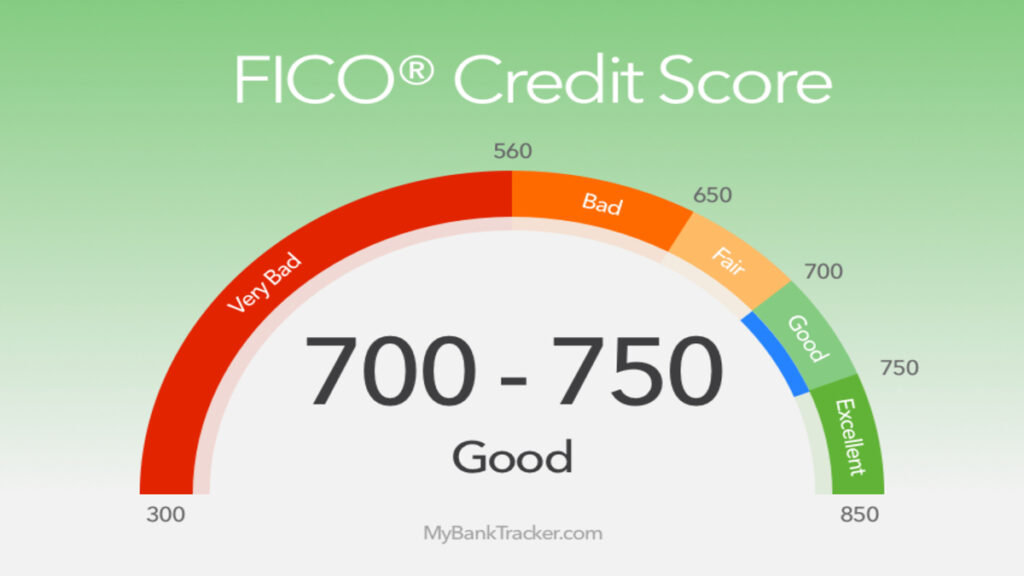
The range of credit scores is 300 to 850. FICO® and VantageScore score range both utilize 300 to 850. However, VantageScore used to use a 501 to 990 range.

850 is the most significant credit score.

The average credit score ranges in the US

The average FICO Score in the United States is 711, while the average VantageScore is 688.

A credit score of 680 or above is regarded as suitable, while a score of 740 or more is considered exceptional. What, on the other hand, is an average credit score?

This question may be tough to answer. Every expert, credit bureau, and a loan officer has a different take on where the line between good and bad credit should be drawn. Your credit score may be low by one lender but acceptable by another.

Furthermore, the adjective “good” is a subjective one. Is “good” synonymous with “great” or “good enough”? Comparing your score to national averages is an excellent place to start. The following percentage of customers have scored in the following credit score ranges in the US, according to the Fair Isaac Corporation (FICO), which was initially launched in 1989:

In the credit market, FICO isn’t the only scoring model employed. Credit ratings come in a variety of shapes and sizes. The other critical scoring model is VantageScore®, which is currently in its third iteration known as VantageScore 3.0.

What is the limit of a bad credit score?

Having a bad credit score ranges from 300 to 549 points. It is widely understood that credit ratings of less than 550 will always result in credit denial. If your score is in this area, you’ll need to put in some effort to raise it.

A bankruptcy filing might lower a credit score to this level. Borrowers with poor credit ratings are overdue around 75% of the time, according to statistics. However, if you continue to make on-time payments, your credit score should increase. Specific forms of loans, such as house loans, are challenging to get with a score in this area, but there are still mortgage possibilities for those with low credit.

What is the reach of a poor credit score?

A poor credit score in the US ranges from 550 to 619. Due to their high credit risk, credit agencies classify customers with credit delinquencies, account denials, and minimal credit history as subprime borrowers. Although credit may be obtained, it is sometimes on highly unfavorable terms, with substantially higher interest rates and penalty costs.

Suppose your credit score is in this area. In that case, you should start addressing any particular credit issues you may have before asking for credit. Subprime borrowers fall behind on their payments 50% of the time.

Fair Credit Score Ranges

620-679 is a fair credit score. Individuals with credit ratings of 620 or above are seen as less risky. They are more likely to be accepted for credit.

Consumers become prime borrowers in the mid-600s. This implies individuals may be eligible for more significant loan amounts, greater credit limits, smaller down payments, and outstanding loan and credit card conditions negotiation power. In this range, only 15-30% of borrowers go overdue.

What is the range of a good credit score?

In the US, anything that ranges from 680–739 is a good credit score. A credit score of 700 is considered the “good” credit level. This FICO score range is familiar to lenders, making a choice to offer credit much simpler. Borrowers in this bracket are usually always accepted for loans and have lower interest rates. If you have a credit score of 680 and it’s improving, you’re on the right road.

The median credit score in the United States, according to FICO, is in this area, at 723. Only 5% of borrowers with this “excellent” credit score fall behind on their payments.

What is the range of An Excellent credit score?

Excellent credit score ranges in the US starts from 740 to 850. Anything in the mid-700s and above is considered outstanding credit. It will result in quick credit approvals and the lowest possible interest rates. The incidence of delinquency among consumers with excellent credit ratings is about 2%.

Extra points don’t make a significant difference in your loan conditions at this level of credit rating. A credit score of 760 is considered equivalent to an 800 by most lenders. On the other hand, a higher score might act as a buffer if there are any unfavorable events in your report. For example, if you max out a credit card (resulting in a 30-50 point loss), the ensuing damage will not knock you down a tier.

Factors that Influence Credit Score

While each credit scoring methodology is unique, a few similar characteristics influence your credit score. These elements include:

  • Payment history
  • Using credit limits
  • Active credit card balances
  • Credit queries
  • Credit available
  • Amount of accounts

In a credit score, each aspect gets its own weight. It’s critical to remain on top of your payments, use your authorized credit, and limit queries if you want to maintain your credit score on the upper end of the spectrum.

Suppose you’re looking to buy a home or take out a loan. In that case, there’s a 45-day grace period during which all credit inquiries are treated as a single cumulative inquiry. To put it another way, if you go to two or three lenders in 45 days to discover the best rate and conditions for a loan, it only counts as one inquiry. This implies they won’t all be counted against you and won’t impact your credit score.

Why does my credit score seem to be so low?

With the current credit score ranges in the US, your rating may seem too low. Late payments, bankruptcy, and other harmful entries on a consumer’s credit history aren’t necessarily the cause of lower credit ratings. A poor credit score may also be caused by a lack of credit history.

Even if you have created credit in the past, things on your credit report may ‘slip off’ if no action has been taken for a lengthy period. Credit ratings must have had some form of action reported by a creditor within the last six months. Suppose a creditor stops updating an old account that you no longer use. In that case, it will vanish from your credit report, leaving FICO and VantageScore with insufficient data to compute a score.

Similarly, individuals who are new to credit should be informed that FICO or VantageScore will not assess their credit history, resulting in a low score. Even if you haven’t made any errors, the credit bureaus still consider you a dangerous borrower since they don’t have enough information on you.

Enhance Your Ratings

“What can I do to improve my credit score?” is another typical question when it comes to credit scores. There are several techniques to raise your credit score to the upper echelon.

  • Cleaning up your credit record is one of these techniques.
  • Paying down your amount
  • Making payments twice a month
  • Increasing your credit limit
  • Opening a new account
  • Negotiating your outstanding balance
  • Making timely payments

Consumers may use Credit.org to assist them in managing various payments. You may combine these payments into one single amount with a reduced interest rate if you use a Debt Management Plan. Contact one of our credit coaches now to learn more!

Final Thoughts

Of course, various lenders have different requirements, so your results may change. Even if you have a good credit score, a bad public record on your credit report might make it challenging to secure a loan. And, although credit score ranges in the US don’t include your income, lenders do. A lender will not accept you regardless of your credit score if they believe there are hazards, such as your incapacity to repay.

No matter where you fall on the scale, keep in mind that various things may both hurt and help you improve your credit score. If you’re having trouble paying off credit card debt, talk to one of our professional credit coaches about how they can help you pay it off quicker and improve your personal financial condition. 

Credit Score Ranges in the US – (Good, Average, or Bad Rating) Read More »

Credit Bankruptcy - Tips to Recover Your Credit Rating

Credit Bankruptcy – Tips to Recover Your Credit Rating

It is a tough choice to file for bankruptcy. Still, it is sometimes essential to get your obligations forgiven and start over. While bankruptcy might help you get rid of your debts, it’s unusual that your credit score would be unaffected.

Your credit score will suffer whether you file for Chapter 13 bankruptcy or Chapter 7 bankruptcy. Even if you complete your payments on time and avoid collections accounts, maintaining your credit score throughout the bankruptcy process is challenging. Fortunately, after filing for bankruptcy, your credit score may be restored.

After you’ve finished the bankruptcy process, you’ll need to start again, and restoring your credit is a crucial first step. Although it may seem that this is an uphill struggle, there are actions you can take to repair your credit to the point where you may qualify for a credit card or a loan for a new vehicle or house.

It’s crucial to understand the various forms of bankruptcy before moving on to the actions that might help you improve your credit score.

Bankruptcy under Chapter 13 and Chapter 7

Individuals who petition for bankruptcy usually do so under Chapter 7 or Chapter 13 of the bankruptcy code. The grounds for filing, eligibility, and penalties are all significant distinctions between the two.

  • Bankruptcy under Chapter 7

The more frequent of the two, Chapter 7 bankruptcy, is filed by persons who do not have enough income or assets to repay all or part of their debt. Because the debtor must liquidate their property to fulfill their payments and escape repossession, this sort of bankruptcy is known as liquidation bankruptcy. To qualify for Chapter 7, you must have a low disposable income that meets the means test, and the process may take up to three months. In addition, Chapter 7 carries a ten-year penalty and will reflect on your credit record.

  • Bankruptcy under Chapter 13

Individuals who earn a lot of money but can’t pay off their obligations in full apply for Chapter 13 bankruptcy. In these circumstances, the debt is restructured, and the person is required to finish a court-ordered payment plan, which may take anywhere from three to five years. Debtors who file for Chapter 13 bankruptcy may retain their homes provided they pay their bills on time throughout the payback term. The seven-year penalty under Chapter 13 bankruptcy is less severe.

How Can you Repair Bad Credit Rating after Bankruptcy?

After filing for bankruptcy, it’s critical to rebuild your credit score to recover financial stability. Following these measures will assist you in rebuilding your credit once your bankruptcy obligations have been erased.

1. Keep track of how long the penalty will last.

The penalty period begins on the day you file for bankruptcy and continues until the penalty expires on your credit report. You cannot file for bankruptcy again for seven years after declaring bankruptcy. The Chapter 7 bankruptcy penalty will expire 10 years after the filing date. In contrast, the Chapter 13 bankruptcy penalty will expire 7 years after the filing date. As a result, if you filed for Chapter 13 bankruptcy and took you five years to finish the repayment plan and discharge your debts, you will still have two years before the penalty is no longer applicable.

2. Don’t get rid of your entire credit score.

Although it may seem the correct thing to do to remove items from your credit report included in a bankruptcy, this might damage your score. Your credit score considers the number of accounts, the kinds of funds, and the age of the accounts that show on your credit report. Removing old accounts from your credit report, even those “included in a bankruptcy,” can reduce the number of accounts on your report and decrease your credit history, lowering your credit score.

3. Examine your credit report for account statuses.

Following the completion of your bankruptcy, the status of your included accounts should be “included in bankruptcy” or “discharged,” with a balance of $0. Your statements must reflect this state since it’s far worse if they seem to be overdue or active with outstanding amounts. If any of the accounts listed in your bankruptcy are active, current, or due, make sure they have been rectified right away and display a $0 balance.

4. Do not apply for new credit regularly.

Make sure you space out your applications when asking for new credit lines following the bankruptcy. Too many applications in six months may hurt your credit score while making you seem desperate to lenders. You should only apply for a new line of credit every six months if you can handle the debt from your previous line of credit.

5. Make Non-Bankruptcy Account Payments to save your credit

Some of your accounts may be excluded if you file for bankruptcy. Certain debts, such as student loan debt, are not dischargeable in bankruptcy. You must continue to make payments on these accounts to boost your credit score. Even though these accounts aren’t included in your credit score, if you don’t pay them on time, you may have problems in the future.

6. Avoid changing jobs often.

While switching jobs will not affect your credit score, it may impair your ability to get a line of credit. When you apply for a new line of credit, lenders will look into your work history, and if you move employment often, they may be less inclined to accept you. Jumping between jobs might indicate a lack of discipline, but sticking with one work demonstrates responsibility and a steady income.

7. Keep an eye on your collection accounts

Collection accounts are following frequent bankruptcy, and they will show up on your credit record. These accounts will typically remain on your credit report for up to seven years after repayment. Still, you may work out a deal with the collector to get them removed after the payment is made. If you do come to an arrangement with a collector, make sure you obtain everything in writing so you can have it erased from your credit report if it still shows up after you pay.

8. Enlist the help of a co-signer

Having a co-signer may help you secure credit cards and loans that would otherwise be difficult to get. If you do utilize a co-signer, you must stay on top of your payments. Anything from a single late payment to default can harm the co-credit signer’s score as well as your own.

9. Make an application for a new credit card after bankruptcy

This is a tricky step to take after filing for bankruptcy, but it is necessary for repairing your credit. Credit card firms recognize that you cannot legitimately apply for bankruptcy for up to seven years, depending on your filing date. Thus, applicants who have just filed for bankruptcy are occasionally accepted. If you don’t qualify for a traditional credit card, you may be able to apply for a retail or gas credit card. Just keep in mind that the interest rates on these cards are higher.

If you cannot get a standard credit card or a retail card, a secured credit card may be an option. For the lender’s safety, some credit cards demand a down payment. The lender may change your secured credit card to an unsecured credit card if you pay off the debt on your secured credit card every month for at least one year.

Whether you acquire a regular credit card or a secured credit card, make sure your monthly amounts are manageable so you can pay them off in full each month. This will allow you to keep track of your debt and gradually improve your credit score. Late payments will show up on your credit record. They may stay there for up to seven years, lowering your credit score, mainly if your bankruptcy is still listed on your credit report.

Credit and Bankruptcy Lawyers Can Assist You

Bankruptcy may be a challenging and complicated process. It’s critical to file for the correct sort of bankruptcy. If you don’t understand all of your legal alternatives, you could not make the most significant selections. Berry K. Tucker & Associates, Ltd.’s bankruptcy lawyers have extensive expertise in bankruptcy processes. They can assist you in making the best choices possible while filing for bankruptcy. We can help you make sense of a complex process and develop a strategy to get you through bankruptcy and improve your credit score after that.

Credit Bankruptcy – Tips to Recover Your Credit Rating Read More »

How To Fix My Credit Score To Buy a House

Applying for a mortgage loan can subject your credit to all kinds of scrutiny by mortgage lenders.

It makes the process of buying a home challenging. It may even halt the whole process. You’re probably searching for some tips to fix your credit score to buy a house.

Your credit score influences the amount mortgage lenders will give you and the interest rate they’ll charge.

Is It Important To Fix Your Credit Score Before Buying a House?

Your credit score highly affects the kind of loan you can qualify for. The better your credit score, the lower your monthly mortgage payment, and interest rate.

So if you want to get these favorable terms and more for your home loan, yes, it is important to improve your credit score before buying a house. 

Low credit scores aren’t particularly appreciated when applying for a mortgage. They are viewed as a sign that the applicant is less likely to service the loan.

Borrowers with high credit scores stand a chance to save thousands of dollars with lower monthly payments and interest rates. If you want to save your money too, first, improving your credit score will be crucial.

Look, if you’re eyeing a $200,000 home with a 15-year fixed mortgage, you can save more than $12,000 over the loan period by improving your credit score from 699 to 760.

What Should Your Credit Score Be Able To Buy a House?

how to fix my credit to buy a home

You can qualify for a mortgage loan with a credit score of even 620, but mortgage lenders do not favor it; they charge higher interest and monthly payments for such scores.

Experian, a credit bureau, suggests that a good credit to buy a house starts at 670. Very good credit begins at 740, and the stand-out credit at 800.

Don’t worry about not qualifying for the best rates given your current credit score; each step forward guarantees lower costs.

How Long Can It Take To Fix Your Credit Score To Buy a Home?

The time to repair credit scores depends on how many disputes you have to fix and what you can achieve upon completing the repair.

Most people fix their credit scores with a particular goal in mind. Whatever it is, knowing how long it can take to fix your credit score to buy a home will help you achieve the goal.

From the first steps of reviewing your credit reports to identify disputes to the last ones of responding to the resolutions, a credit repair for the average consumer takes three to six months.

However, Fewer errors and disputes may lessen three periods to even a month. 

How can I fix my credit score to buy a house?

There are several ways to fix and improve your credit score to buy a home.

1. Check And Improve Your Payment History

Payment history is one of the major factors affecting your credit score. It takes up the highest percentage of your credit score – 35%.

From now on, avoid late payments if you want to improve your credit score to buy a house.

Delayed payments can result in all sorts of problems that can damage a credit score: repossessions, bankruptcy, foreclosure, and collection accounts.

Delayed payments by up to 30 days will stay on your credit score for seven years, and no one is waiting for that time to end to buy a house.

So, if you are looking to boost your credit score to buy a house, start paying off all your bills on time. With time, it will positively impact your credit score.

 You can even put all your regular utility bills on an automatic monthly payment to make sure you never miss a payment.

2. Analyze Your Credit Report

Checking and fixing your credit reports may improve your credit score to buy a house. Errors are what you’ll be looking for.

Get your three credit reports from TransUnion, Experian, and Equifax annually and check for:

  • Duplicate accounts
  • Incorrect payment statuses
  • Incorrect accounts
  • Misspelled names
  • Outdated information
  • Incorrect dates

The Fair Credit Reporting Act allows consumers to access a free copy of all the credit reports every year from annualcreditreport.com. Check them out every four months for regularly updated information.

In case you find errors, file a formal dispute on the website of all the credit reporting bureaus or write them a letter. Specify each error and describe them accordingly, then request correction and copies of documentation as evidence.

The bureaus have one month to investigate your claim. They will send a letter with the results.

3. Opt For A Debt Consolidation Loan

Balance transfer or debt consolidation loan combines all your outstanding debts from different accounts into one monthly payment.

If you have several credit accounts that give you trouble managing, a debt consolidation loan may be most suitable for you. It helps avoid missing any payments and improves your credit utilization. 

Applying for a consolidation loan results in a hard inquiry on your credit reports. It means your score will drop slightly after the inquiry.

So make timely payments above the minimum amount required after getting a debt consolidation loan.

4. Clear Credit Card Debt

You’ll witness an increase in your credit score once you pay off your credit card debt.

What you spend compared to your credit limits is called credit utilization. It accounts for 30% of your credit score. 

Mortgage lenders use your credit utilization to determine whether you manage your debts well or not.

Generally, Utilizing 20 – 30% of your credit card limit is considered okay. Using more might indicate the possibility of delayed repayments or hint that you are in financial challenges.

Poor credit utilization is straightforward to solve. Simply clear, or at least pay down your credit card debt.

It sounds easy, but in truth, it may not be; however, this method is not complicated. By having little or no credit card balances, your credit score improves by up to 30% in no time.

Having fewer expenses can help you manage your credit card debt. Unsubscribe from apps and services that you no longer use, or instead charge monthly.

5. Become An Authorized User

For those with very little or no credit history at all, becoming an authorized user in someone else’s credit account can help fix your credit score to buy a house.

It helps boost your score, especially if the original holder’s credit score is high. Although you can purchase items or pay for services using the card, total liability still falls under the original holder.

Becoming an authorized user to an account with good credit adds more credibility to your credit.

Final Thoughts

Fixing your credit before you buy a house is a worthwhile action. It increases your chances of qualifying for a loan and attracts favorable terms.

The results may not be instant, but consistency is key in improving your credit score.

If you’re thinking of buying a house with bad credit, apply these steps and start getting ready to go house hunting. 

How To Fix My Credit Score To Buy a House Read More »

What Credit Score Do You Need to Buy a House?

The credit score is crucial in obtaining a mortgage loan, that is why most prospective home buyers fear that theirs may be too low to acquire one. It has not only an impact on your qualification but also the interest rate to be charged.

So, what is a good credit score to buy a house in 2022?

Whether or not a credit score is good is often subjective and may have minimal influence on buying a house. This is because mortgage lenders follow specific rules that decide what credit score you require to purchase a house.

There are, however, minimum credit score requirements to take out a mortgage loan. These requirements differ based on the type of loan you want to obtain.

Here are the loan types and the required credit scores.

Conventional Loan: 620

Conventional loans are the most common loans and have a minimum credit score of 620. For those who may want the best interest rates, a score of 740 and above will help.

Conventional loans are suitable for borrowers with high credit scores who can provide a down payment of 3% or more. They also provide the best interest rates and flexible repayment periods of 8 to 30-year loan terms.

Conventional loans aren’t federally insured, but they follow standards set by Fannie Mae and Freddie Mac, government-sponsored mortgage loan lenders. There are conventional loans that do not follow the standards established by these organizations, termed ’’jumbo’’ loans, which we’ll discuss later in this article.

Conventional loans are obtained through credit unions, mortgage brokers, and mortgage lenders. They are popular because of their simple approvals and low-interest rates.

FHA Loan: 580

FHA loan is the earliest mortgage loan program, designed by the Federal Housing Administration in the 1930s to make homeownership achievable.

FHA mortgage loans require a credit score of at least 580 and a down payment of as low as 3.5%, making them easily accessible than other loans. They also offer low-equity refinances that let you refinance up to 97.75% of the property’s value.

FHA loans are covered by the Federal Housing Administration, making qualification easy and allowing lenders to administer low-interest rates.

FHA loans specifically tend to attract first-time homebuyers who have either a young or lousy credit history partly because of the lenient credit requirements of FHA loans.

You see, with an FHA loan, you can qualify for a mortgage with a FICO score of even 500, but with such a low score comes some significant drawbacks.

First, you’ll require a down payment of at least 10%. Secondly, this type of loan is considered a subprime loan, meaning you might get the least favorable terms and end paying high-interest rates. Finally, you ought to have some very low qualifying ratios, that is, your overall debt-to-income ratio and your housing expense ratio.

All in all, the higher your credit score is, the more benefits you’ll accrue out of an FHA loan.

VA Loan: Not Specified

The VA loan is a type of mortgage insured by the Department of Veterans Affairs. The Department of Veterans itself doesn’t issue VA loans: they decide who is eligible for one and the lenders to issue it. It can be a clever move if you meet the requirements.

The requirements are that you must be an eligible veteran, service member, or a surviving spouse. A Certificate of Eligibility(COE) is a document issued upon proof of your claim to show your loan lender that you are, in fact, eligible for a VA loan.

VA loans don’t need any down payments and lack an industry-set minimum credit score requirement to obtain it though many lenders opt for a score of 620.

VA loans have simple credit requirements and offer more benefits than conventional loans, for example, the lack of down payment, more lenient credit requirements, lower interest rates, and no monthly mortgage insurance.

However, VA loans charge a one-time funding fee, which varies based on your down payment, the number of times you have chosen a VA loan, the type of service you logged, and the type of loan.

If you don’t provide any down payment on your first VA loan, you will receive 2.3% of your loan amount as the funding fee, whereas if you provide a 10% down payment on your house, you will receive 1.4%.

USDA Loan

The U.S Department of Agriculture develops USDA mortgage loans to make homeownership in eligible rural and suburban areas accessible.

Like the Department of Veterans Affairs backs VA loans, the Department of Agriculture backs USDA loans.

USDA provides three main loan programs:

  • USDA Loan Guarantees issued by participating mortgage lenders and offer minimal down payments and low-interest rates.
  • USDA Direct Loans issued by USDA for eligible low-income persons with interest rates of 1%.
  • USDA Home Improvement Loans issued to qualified homeowners to improve the state of their homes.

The credit score requirement to obtain a USDA loan is not official though most mortgage lenders prefer a score of 640 and higher to receive streamlined processing. Lower than that may subject you to more stringent underwriting standards.

USDA loans are specifically for low-income families, so for you to be eligible, your adjusted gross income mustn’t be above 115% of the median income in the area.

Your lender will also look into your debt-to-income ratio before approving you for a loan. The recommended DTI is typically 43% or lower.

USDA may be an excellent option if you are looking for a zero percent down payment mortgage and don’t qualify for a VA loan.

Jumbo Loan

Jumbo loans are meant to finance homes that are too costly for a conventional conforming mortgage loan.

They surpass the loan limit set by Fannie Mae and Freddie Mac; for this reason, they are referred to as conventional non-conforming mortgage loans. Lenders of this loan, therefore, take a risk in case of defaulted payments as Fannie Mae and Freddie Mac don’t insure them.

There is no fixed credit score requirement, but the non-conformance to loan limits makes mortgage lenders consider a minimum score of 700 for approval. The higher your credit score, the better the mortgage rate you will get. 

Depending on income and credit, you may require a down payment of between 5 and 25 percent. Compared to conforming loans, jumbo loans may charge higher interest rates depending on your financial status and the lender.

Jumbo loans also have higher closing costs because the loans are bigger and contain other extra qualification procedures.

Final Word

If you were wondering what is a good credit score to buy a house? This article has made it clear that the credit score requirements to buy a house vary depending on the mortgage loan you choose.

The higher the credit score requirements, the better the mortgage plan you get.

Other than the credit score, there are other considerations worth looking into, such as the debt-to-income ratio, income and assets, and the loan-to-value ratio.

This article offers insights designed to help prospective home buyers understand what loan type corresponds with their credit score to buy a house in 2022.

Do you need help with your credit score? Credit score experts at Ebony Credit can help. Book an appointment today for a free consultation.

What Credit Score Do You Need to Buy a House? Read More »

How to Get a Repo off Your Credit Card: The Ultimate Guide

Having your car towed for defaulting on your auto loan will have you trying to figure out how to get a repo off your credit card. That’s some very important information because a repo will stay on your credit report for up to seven years after the default is reported to credit bureaus.

The dent it leaves on your credit score will also make it difficult to access new lines of credit. If you do manage to, it may be at higher interest rates.

How Repossession Happens

Many only know of repossession when a bank takes back a car. When a client defaults on payments, the bank can send someone over to collect the vehicle, usually without prior notice.

You can also choose to voluntarily give the vehicle back. This gives some kind of control or order on how the repossession occurs. 

While both may be painful, one is much less embarrassing and dramatic. They, however, both carry the same weight when it comes to their impact on your credit score. 

In the event that selling the car doesn’t enable the bank to fully recover its money, you will still be left paying a car loan with no car plus a bad credit rating. It becomes more difficult to maneuver. 

The Repo Effect on Your Credit Score

A repo means you had a debt and stopped making payments for a while. The lender then repossessed the car to recoup their cash.

The whole premise of the credit rating is the ability to pay back debt and within the required length of time. A repo, therefore, causes the credit rating to take a dip. A lender may even charge an extra fee to give you credit since they would be taking a risk with your soiled repayment record.

It is not just the repo in itself that causes damage. Your credit score will suffer because of the following too:

  • Towing fees to move your car, where applicable
  • Late fees plus their interest
  • Several months of missed payments
  • Car storage fees as the car sits in the lot
  • Any balance still owed after repo

Any other additional costs incurred lower the credit score even further. Seven years is too long to let it feature on your record. There are proper ways to address this situation. 

How to Get a Repo off Your Credit Card

1. Dispute It

According to the Fair Credit Reporting Act (FCRA), negative records must be true. Check for any inconsistencies in your report. It could be a wrong date or even a misspelled address. If there was an error, you can and should dispute it immediately. 

Make sure you explain why the item is incorrect when you dispute it. Send your complaint to all three bureaus (Equifax, Experian, and TransUnion) because they usually have the same records. You can do it online or via certified mail.

They are required to address the complaint within 30 days.  

2. Check with All Credit Bureaus

Once one credit reference bureau is reporting a repo, the higher likelihood is that the other two are as well. That’s because your lender shares the same information with each of them. Reach out to them with your details and confirm. 

If they are reporting inaccurate information, they will have to correct it or remove it. 

Where there are inaccuracies and any of the credit bureaus doesn’t respond to your request, reach out to the Federal Trade Commission (FTC).

3. Speak to the Lender

There is room to negotiate with your lender. You can work out a new arrangement that works for both parties. Maybe they can allow you to refinance the car or trade it in. Some may accept delayed payments or a different payment plan altogether. 

Be sure to speak to someone who has the authority to sign off on the new arrangement. You may need to be persistent in your asking before you get a favorable response but it will be worth the trouble. 

When you do get them to bend, make sure to have it in writing.

4. Hire a Credit Repair Professional

You can also ask credit repair professionals to do the heavy lifting for you. It will come at a monthly cost but they will handle all the disputes and negotiations for you and ensure errors are cleared.

Building Your Credit Report after Repo

Regularly going through your credit report will ensure you catch any incorrect information in good time. Sometimes this happens because of credit card fraud or even double listing of a credit account.

If the information is correct, you can start by slowly building trust with your lenders. Take out small loans you know you can repay and make sure you repay them on time. You may also consider a credit card with a low monthly limit. Start slow and build back slowly.

While a repo is a negative mark, it has less impact as it ages. Going forward, it is best to keep your credit report looking healthy. As the repo ages, lenders will look less into it and more into your current abilities and creditworthiness. 

Utilize your credit wisely, keep your total debt in check, maintain a good repayment history over an extended period, and diversify your credit lines a little. If you don’t need it, don’t get it yet. It will serve you better if you take it at the right time.

Final Words

A repo does not mark the end of your borrowing days. It may take about two years of a spotless repayment history for most lending institutions to consider extending credit your way but it soon ends.

In the event, you can’t wait that long, second-chance auto financing options exist. A second-chance car loan offers you credit after you’ve been denied by top-tier lenders. They know their clients have less-than-perfect histories and still accommodate them.

Whichever option you choose to take, be responsible for your credit. Remember, the goal isn’t just to own a car or how to get a repo off your credit card but to have a good credit rating to allow for better financial opportunities in the future.

How to Get a Repo off Your Credit Card: The Ultimate Guide Read More »

Scroll to Top